26.06.2025, 12:18
Korrektur der Quellenangabe bei Punkt 2. Und es wurde auch in den Übersetzungen angepasst.
Neue Begründung:
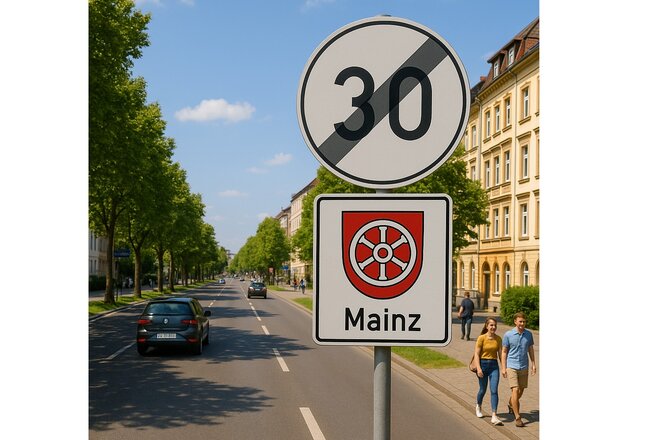
1. 501. 50 km/h is the legally defined standard speed limitwithin incity urban areasThelimitsThe introduction of a 50 km/h limit in urban areas is based on a nationwide,nationwide well-testedand well-established traffic framework that balances safety, traffic flow, and everyday practicality. DeviatingDeparting from this rulestandard without compelling factual reasons constitutes an unnecessary departuredeviation from the trafficestablished standard.2. Nonorm.2. No clear evidence offor environmental benefits fromof 30 km/h speedzonesA limitsSeveral studies, including thosestudy by the EnvironmentalState AgencyInstitute for the Environment of theBaden-Württemberg state of Baden-Württemberg, show that reducing the speed limit toshows: 30 km/h doeslimits do not significantly lowerreduce emissions of nitrogen oxideoxides or fineparticulate particle emissions,matter, especially when traffic isin flowing smoothly.traffic. On the contrary, more frequent braking and acceleration can even be counterproductive.3. Smoothcounterproductive.3. Efficient traffic flow is not a luxury, but a necessityIn aan timeera whenwhere mobility is an integral part of daily life, efficientsmooth traffic flow is essential for workers, families, delivery services, and emergency responders. Artificial slowing down leads to morelost time loss,time, increased stress, and ultimately,ultimately: a lowerreduced quality of life —– not higher.4.more.4. Economic Don’timpact underestimatemust thenot economicbe impactLocalunderestimatedLocal businesses along Rheinallee and Kaiserstraße dependrely on accessibility —– for customers, suppliers, and staff. SlowingSlower traffic can lead to businesseconomic decline, especially when parking spaces and driving comfort have already been reduced.5. Promotereduced.5. Strengthening personal freedom and individual responsibility instead of restrictionsNotoverregulationNot every street needs to be turned into a "traffic-calmed zone." Those who deem aconsider 30 km/h limit necessary can rely on many existing rulesregulations in residential areas or near schools —– but Rheinallee is a major traffic artery, not a playground.6. 50playground.6. 50 km/h does not automatically mean more noise —– modern vehicles are quieter than everThe often-cited noise reduction argument for 30 km/h is not generallyuniversally supported by evidence. According to the German Environment Agency, the noise level at 30 km/h is only marginally lower than at 50 km/h, particularly for modern cars — and only at constant speeds without braking or stop-and-go traffic. What really matters is not the speed limit, but the traffic flow, not maximum speed.Moreover, inflow.In urban traffic, the main noise source of noise is not the engine but the tire rolling noise —– whichand isthis nearlydiffers theonly sameslightly atbetween 30 and 50 km/h.Residentskm/h. Residents often subjectively report less“less noisenoise” when traffic flows more smoothly —– which is themore caselikely at 50 km/h.7. A 30km/h.7. 30 km/h limit createsmeans an unreasonable burden on citizens —– with higherincreased risk of fines and potentially existential consequencesTheconsequencesA 30 km/h restrictionlimit means that even minor speeding —violations by justof a few kilometers per hour —km/h can leadresult toin significantly higher fines, penalty points, or even driving bans. Especially in cities with tight tolerance levelstolerances and automaticautomated enforcement, everydaydaily drivingcommuting becomes a radarspeed trap —– for people just going about their normal routines.In Mainz,Mainz in particular, where it is known that the city administration is known to generally favorsfavor expanding 30 km/h zones, thereit iscreates athe growing perceptionimpression that citizens are being deliberately targeted for revenue.Thererevenue.Two fixed speed cameras are already two stationary speed cameras installed on the affected Rheinallee. ThisThere raisesis thea justified suspicion that the reintroduction of thea 30 km/h limitzone may also be fiscally motivated —– todisguised generateas additional income under the guise ofa health or safety.Forsafety measure.For many people who relydepend on their driver'sdriver’s license —– such as commuters, salespeople,field tradespeople,staff, tradespeople or healthcarecaregivers workers —– a driving ban can be existentially threatening. Traffic policy must not endangerinterfere with people’s livelihoods, but must be proportionate, fair, and transparent.transparent.________________________________________Sources for key points:• Emissions at 30 km/h vs. 50 km/h: German Bundestag• Basis for removal of the 30 km/h zone in Mainz: SWR + tagesschau.de• Noise protection through 30 km/h zones: BYC-News Online Newspaper
Unterschriften zum Zeitpunkt der Änderung: 2.935 (2.209 in Mainz)


