73 Unterschriften
1.000 für Sammelziel
Diese Petition gibt es auch in Deutsch.
Petition richtet sich an: The German Federal Government
This concept does not merely call for a solution – it is the solution. Fully developed and ready for immediate deployment. It closes the current gap in establishing a national rescue and prevention system for our marine mammals.
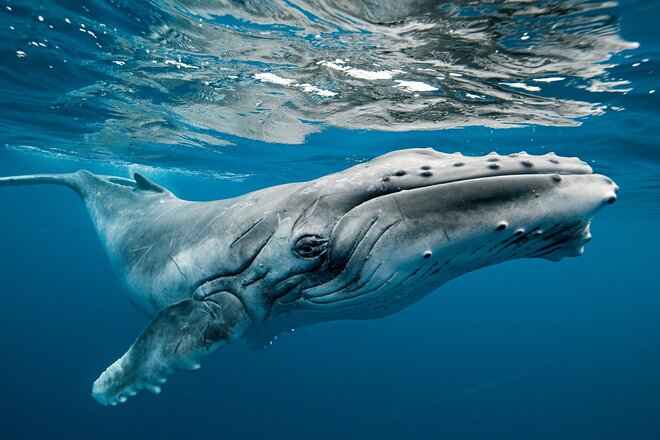
The case of the stranded humpback whale Hope/Timmy in the Baltic Sea has revealed a critical gap: Germany does not have a state‑coordinated rescue system for large marine mammals, even though responsibilities are clearly defined in conservation law and the associated risks have been known for years.
An injured, exhausted animal for weeks —alone, disoriented, and entirely dependent on human responsibility—was left without clear procedures, defined responsibilities, or binding emergency measures.
The suffering of the whale has left many people stunned. Germany operates highly professional emergency coordination centers for human crises that can mobilize within minutes, yet even the most basic stabilizing measures for a marine mammal require lengthy administrative procedures. This contradiction has caused widespread frustration, especially since the Animal Welfare Act requires authorities to act promptly to prevent suffering.
For decades, it has been well known that large marine mammals frequently end up in distress due to human‑caused factors. Many European coastal nations have therefore established state‑organized rescue structures for marine mammals — Germany, however, has not.
The Netherlands, with only 451 km of coastline, operates a fully functional national coordination center. Germany, by contrast, has roughly 2,400 km of coastline and still no central operational structure. In the case of Hope/Timmy, the Netherlands could have provided assistance within a matter of hours — if Germany had requested it.
In countries where marine mammal rescues are consistently successful, a state‑run coordination center is always in place. In Germany, NGOs can observe but cannot act, as they lack the necessary authorization from the state authority.
This structural gap must be closed without delay.
IMMEDIATELY IMPLEMENTABLE MEASURES
1. Establishment of a Central Reporting Hotline for sightings of large marine mammals
A federal 24/7 coordination center should take full responsibility for receiving and managing all sighting reports from the coast guard, fisheries, and the general public. This enables immediate action and ensures that diagnostic and response teams can be deployed early to prevent strandings whenever possible.
2. Establishment of a Binding National Emergency Chain for marine mammal incidents
Clear responsibilities must be defined for authorities, fire brigades, veterinarians, and specialized response teams.
3. Standardization of Operational Protocols
Uniform procedures must apply nationwide — from the first sighting to the prevention of avoidable strandings — ensuring that coast guard units, authorities, and responsers follow the same operational principles.
4. Immediate Deployment of a Mobile Response Unit
A small, trained team must be able to reach the site within defined response times, assess the animal’s condition, and initiate appropriate measures.
Response Category A – Acute Emergency
· Response time: ≤ 20 minutes
- Applicable in cases of immediate danger such as strandings, entrapment in mud, respiratory distress, severe disorientation, or visible injuries.
Response Category B – High Risk, but not an acute emergency
- Response time: ≤ 60 minutes
- Applicable when animals are in shallow waters, harbors, or other risk zones, or when unusual behavior indicates emerging distress.
Response Category C – Routine deployment / sighting without suspicion
- Response time: ≤ 6 hours
- Applicable for sightings of apparently healthy animals in safe coastal areas.
Begründung
5. Immediate request for international support
As long as Germany does not have its own coordination center, support must be requested without delay from states that operate established rescue systems. This includes the immediate involvement of specialized international NGOs, whose expertise is essential to prevent misjudgments, delays, and avoidable deterioration. In this context, a framework authorization must be introduced, as already standard practice in disaster management and the Federal Agency for Technical Relief (THW). It enables the incident command to act independently within a clearly defined scope, without requiring separate approval for every individual measure.
6. Immediate first‑aid measures
Thermal imaging diagnostics allow rapid, contact‑free assessment of hypothermia, overheating, inflammation and stress reactions and are an international standard. They protect the animal and help responders assess risks realistically.
A safety zone is created by several boats anchored in a ring. Tarps stretched between them form a deep, secure water space with an open entrance that is closed once the animal enters.
Salinity is adjusted to support recovery. Guidelines define when an animal is ready to be escorted back to its habitat.
Uniform immediate measures prevent physiological damage: regular moistening of the skin, creating a drainage channel, stabilizing micro‑depressions, and using tarps, pontoons or flow‑guiding structures to relieve pressure. After returning the animal to deeper water, it must be guided into a controlled safety zone. A consistent reference person supports cooperative stabilization impulses. Stranding must be prevented if the animal is sighted early enough. Measures must be adapted to the stress level. Rescue takes priority unless blood diagnostics confirm the opposite. Shallow‑water stranding causes significant strain and exceeds the stress level of technical interventions.
7. Minimum standards for diagnostics and initial care
The Animal Welfare Act requires the prevention of suffering but does not define diagnostic minimum standards. These must be established nationwide. Reliable decisions require clear medical parameters to distinguish a dying animal from an exhausted one. As long as a marine mammal breathes, vocalizes or moves, it must not be classified as “dying.” Only blood diagnostics allow an objective assessment. Decisions must not be based solely on external appearance. If blood sampling is temporarily impossible due to deep mud, the animal’s movement radius must be checked regularly for stable ground until safe access is possible. Phases of reduced activity should be used for blood sampling.
8. Mandatory immediate reporting of lost nets
Without sanctions, but with documentation and immediate activation of divers to recover lost nets promptly.
All immediate measures require no legislative decision and can be implemented at once.
Structures to be established
Germany needs a state‑responsible rescue chain that defines clear procedures, responsibilities and decision‑making pathways from the moment of first sighting. This includes protected working areas, coordinated operational logic and reliable cooperation between the coast guard, authorities and expert institutions. Modern fishing technologies, monitoring and documentation of nets, mandatory reporting of net losses, recovery of ghost nets, training for fisheries, speed limits, route adjustments, acoustic warning systems and clear responsibilities for dynamic coastal zones must be regulated nationwide.
Goal
A complete concept provides a scientifically developed framework for a national strategy. It calls on the federal and state governments to work with expert authorities and science to build a modern, effective and internationally compatible rescue and prevention system and to implement the immediate measures without delay. Prevention is a human responsibility and reduces costly emergency operations. The protection of large marine mammals is a state duty and must not depend on chance or volunteer work. A scientifically developed 20‑page long version exists and is provided exclusively to government authorities upon request for review. Scientific institutions receive relevant sub‑concepts upon request.
Vielen Dank für Ihre Unterstützung, German Marine Rescue Initiative, Wildberg
Frage an den Initiator
Petition teilen
Angaben zur Petition
Petition gestartet:
28.04.2026
Sammlung endet:
13.10.2026
Region:
Deutschland
Kategorie:
Tierschutz
Diese Petition wurde in folgende Sprachen übersetzt
Übersetzen Sie jetzt diese Petition
Neue SprachversionWerkzeuge für die Verbreitung der Petition.
Sie haben eine eigene Webseite, einen Blog oder ein ganzes Webportal? Werden Sie zum Fürsprecher und Multiplikator für diese Petition. Wir haben die Banner, Widgets und API (Schnittstelle) zum Einbinden auf Ihren Seiten. Zu den Werkzeugen
Petition teilen
Diese Petition wurde in folgende Sprachen übersetzt
Übersetzen Sie jetzt diese Petition
Neue SprachversionDas könnte Sie auch interessieren

309
Unterschriften
101 Tage
verbleibend


Familie
Protect Children: Ensure the Safety of Mini Mäuse Daycare During the Demolition of Kurfürstenbad
110
Unterschriften
273 Tage
verbleibend
Es geht um Walschutz und das solche Fälle wie bei Timmy dem Wal aus Poel das sowas nicht mehr passieren darf ,und das nur Experten solche Aktionen leiten sollten die sich mit der Anatomie eines Wales auch auskennen und nicht irgendwelche Laiendarsteller denen es nur um Profit geht Solche Leute habe da ÜBERHAUPT NICHTS verloren.